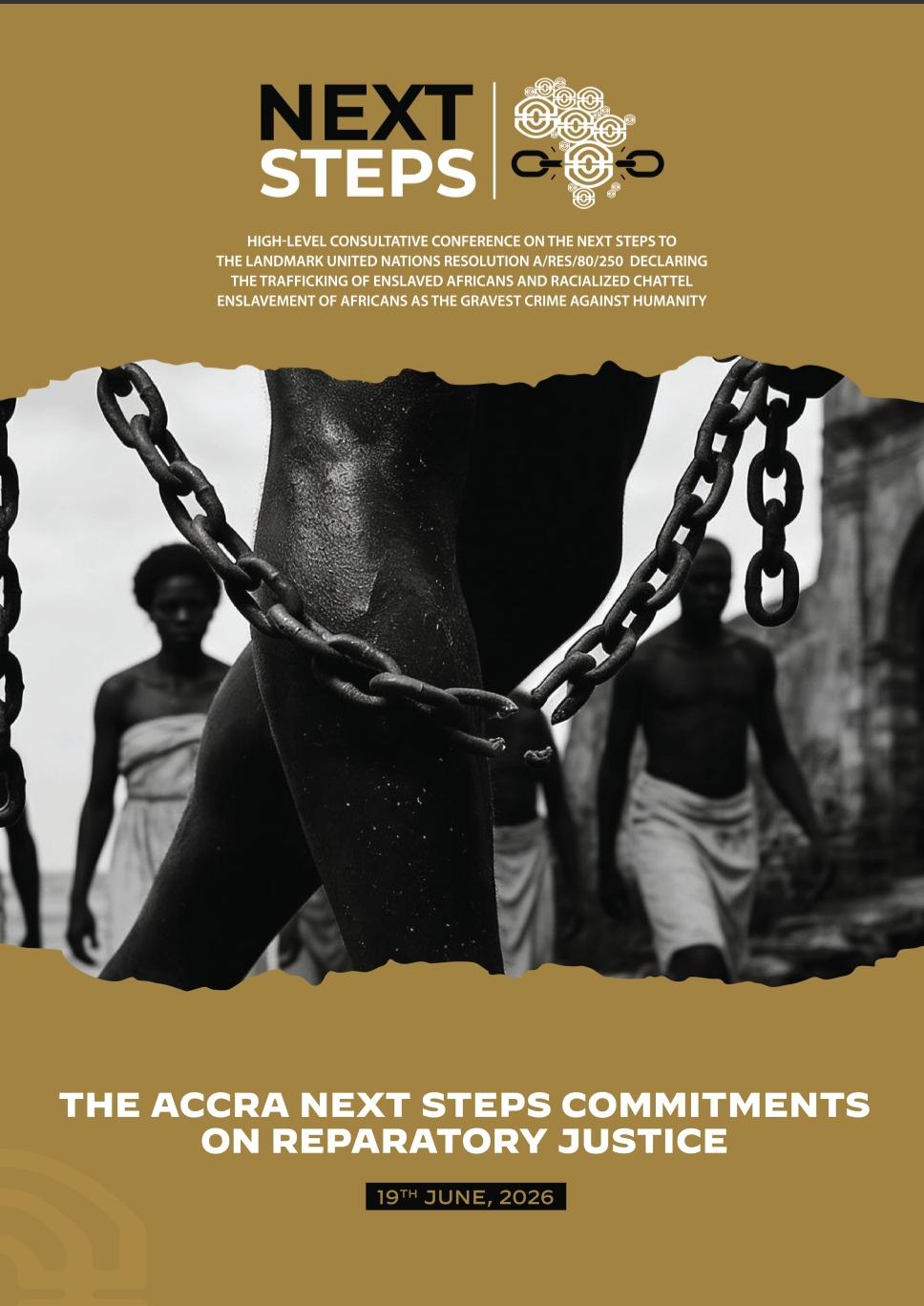
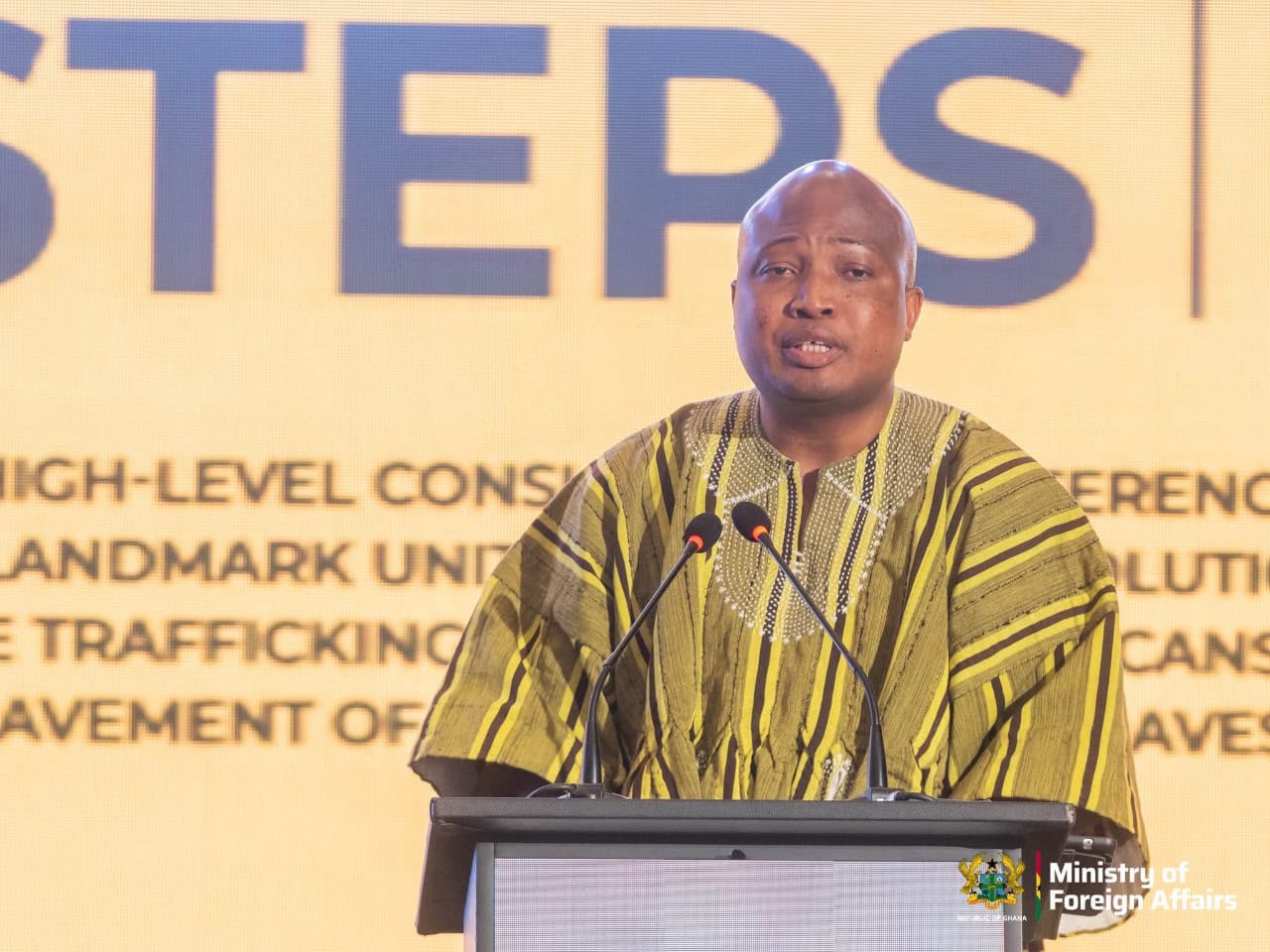
The Minister for Foreign Affairs, Honourable Samuel Okudzeto Ablakwa welcomed participants to the High-Level Consultative Conference on the Next Steps to the Landmark United Nations Resolution on the Trafficking of Enslaved Africans held under the auspices of the President of the Republic of Ghana and African Union Champion on Advancing the Cause of Justice and the Payment of Reparations, His Excellency John Dramani Mahama from 17th to 19th June, 2026. In his remarks, Honourable Ablakwa described the Consultative Conference as a defining moment in the global pursuit for reparatory justice.
In his remarks, he expressed delight at the commitment demonstrated by governments, institutions and individuals to pursue reparatory justice aimed at addressing the enduring legacies created by historical injustices. Drawing on the momentum garnered on the subject, he expressed optimism that its objectives would be ultimately achieved. He recalled milestones in the struggle against slavery, colonialism and apartheid and emphasized that reparatory justice would be realized with dint of perseverance and collective action.
He lauded President Mahama for his leadership in tabling the resolution for adoption and paid tribute to all the 123 Member States of the United Nations for standing on the right side of history by voting in favour of resolution A/RES/80/250 when history beckoned. He acknowledged the contributions made by world leaders, scholars, researchers, activists, youth groups and others to help secure the landmark outcome on 25th March, 2026 at the United Nations General Assembly.
He stated that the Consultative Conference is the first major global platform convened following the adoption of the resolution and therefore provides an opportunity to collectively define the next phase of the reparatory justice agenda.
He said that Ghana was once a major departure point during the transatlantic slave trade but now serves as a sanctuary for healing, remembrance and reparatory justice. He then called on participants to approach deliberations with mutual respect and urged the international community to move beyond historical recognition toward concrete outcomes capable of addressing the enduring consequences of slavery and enslavement.