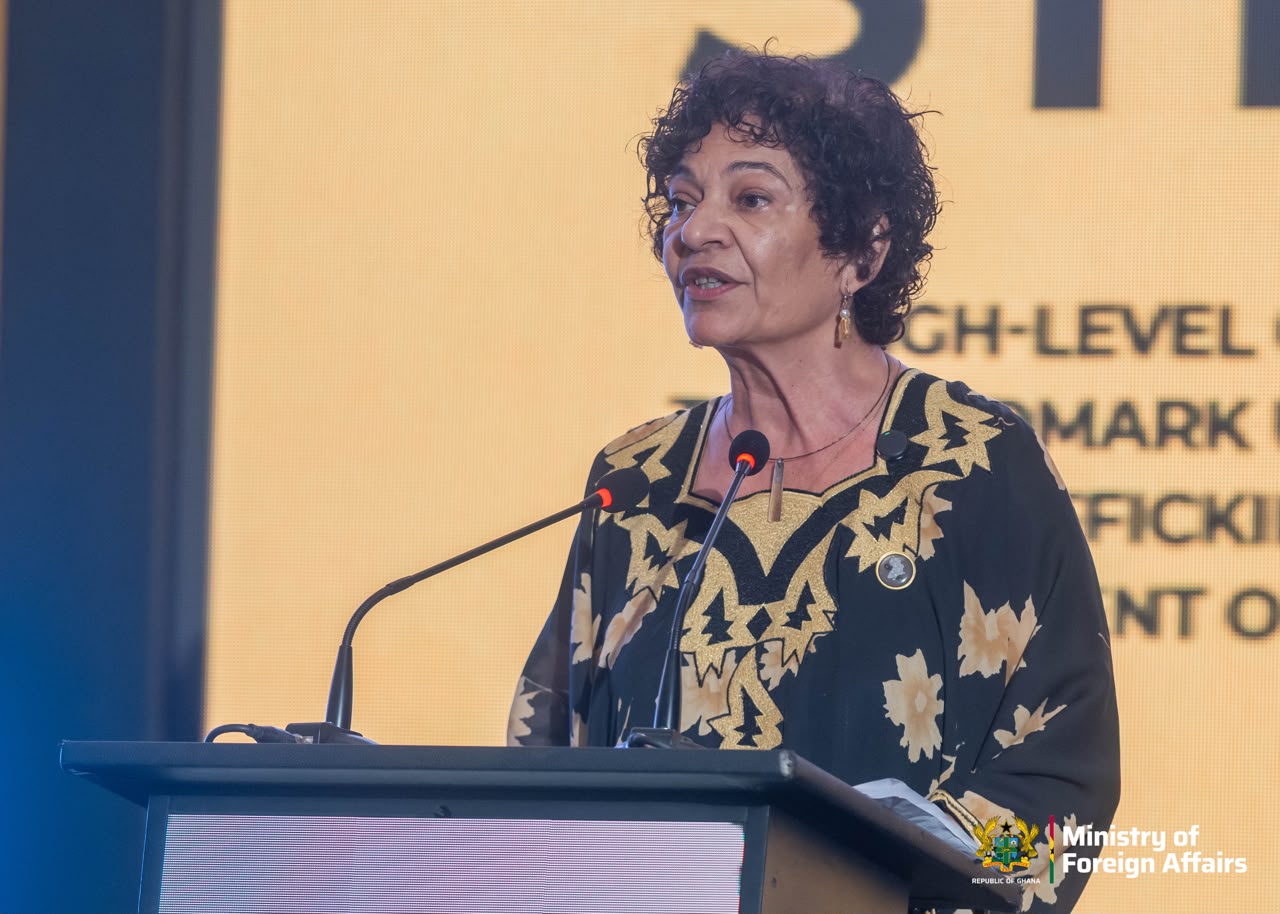
In a message delivered by the Assistant Director-General, Ms. Lydia Arthur-Britto at the High-Level Consultative Conference on the Next Steps to the Landmark United Nations Resolution on the Trafficking of Enslaved Africans, UNESCO assured of its longstanding commitment to advancing understanding of the history of slavery, enslavement and their enduring legacies. She noted that historical truth remains an essential foundation for justice, dignity and reconciliation.
She highlighted initiatives undertaken by UNESCO including the General History of Africa Programme and the Roots of Enslaved Peoples Programme, formerly known as the Slave Route Project, which promotes research, education, remembrance and international cooperation. She also underscored UNESCO’s support for the preservation of memory sites, archives and documentary heritage linked to slavery and the slave trade, including Ghana’s forts and castles inscribed on the UNESCO World Heritage List.
She emphasized that remembrance, education, dialogue and cooperation remain central pillars of the landmark UN resolution and assured of UNESCO’s continuous support for efforts aimed at addressing the enduring legacies of enslavement and promoting human dignity, justice and inclusion.