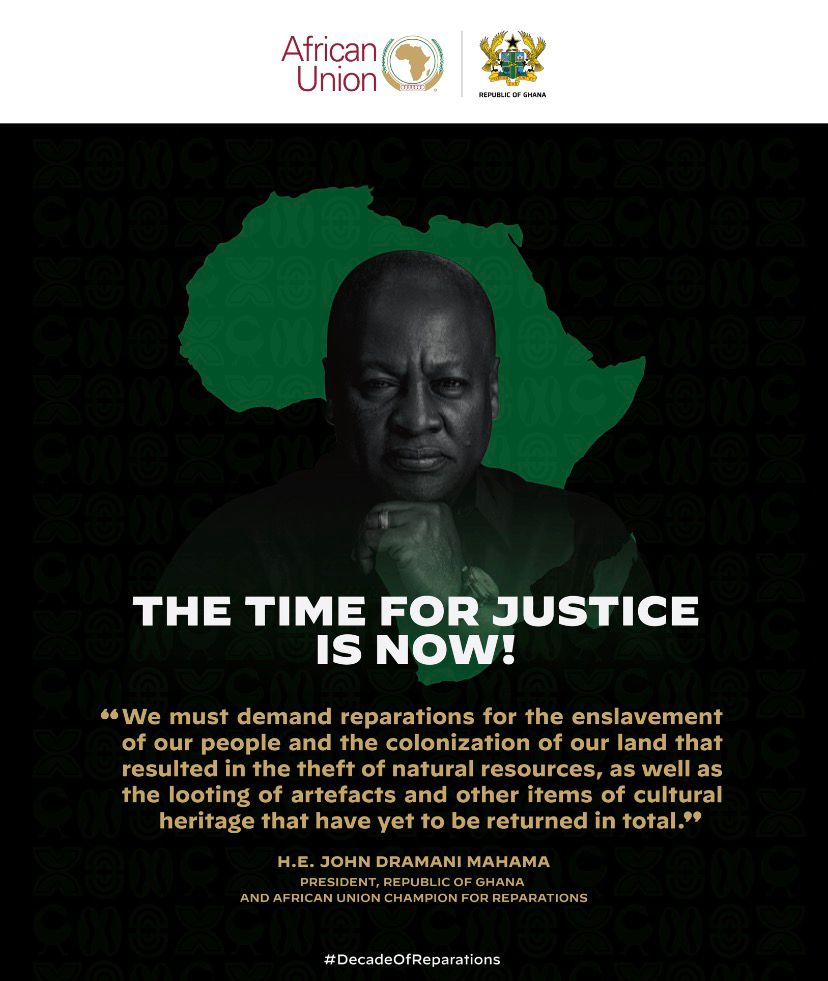

The Government of the Republic of Ghana in its capacity as the African Union Champion for Reparations is hosting the African Union Committee of Experts on Reparations (AUCER) and the African Union Legal Experts on Reparations (AULER) for their two-day joint Bureau meeting, which is expected to strengthen coordination to advance the continent’s reparations agenda.
In his keynote address at the opening session of the meeting, the Minister for Foreign Affairs, Honourable Samuel Okudzeto Ablakwa (MP) reaffirmed the commitment of Ghana to play its role as Champion in line with the quest of the Union in advancing justice for Africans and people of African descent through structured, credible and coordinated multilateral engagement. He underscored the historical significance of Ghana as a key site of memory in the transatlantic slave trade and noted that many Africans forcibly removed from the continent passed through forts and castles along the coast of Ghana. He highlighted the long-standing role played by Ghana in Pan-African solidarity and emphasised that the pursuit of reparations by Africa is a matter of justice. Describing the transatlantic slave trade as a sustained exploitative economic system, he accentuated the need for restitution and cited instances where reparations had been paid for crimes committed in the past. He called for sustained coordination, clarity of purpose, and strategic engagement to ensure that Africa’s position is effectively articulated within the multilateral system and that the issue of reparations is not treated as a peripheral matter.
Speaking on behalf of the Chairperson of the African Union Commission, the Director of the Citizens and Diaspora Directorate (CIDO), Ambassador Amr Aljowaily noted that the joint meeting had being convened in pursuance of African Union Assembly Decision 884, which elevated reparations from a moral appeal to a structured continental programme of action. He explained that the decision designated reparations as a flagship programme of the Union and established dedicated expert mechanisms to advance its implementation. Ambassador Aljowaily emphasised that the meeting represented a critical step in consolidating the institutional architecture of Africa on reparations to strengthen coordination between technical and legal experts to support informed policy, diplomatic and legal engagement at continental and global levels. He indicated that the pursuit of reparations by the continent is consistent with aspirations 3, 5 and 7 of Agenda 2063. He expressed appreciation to the Government of Ghana for hosting the meeting and for its leadership in advancing the African Union’s reparations agenda.
In his remarks, the Acting Chair of the African Union Legal Experts on Reparations (AULER), Advocate Kingston Magaya underscored that the pursuit of reparations constitutes a legal imperative grounded in international law, justice and human dignity. He noted that the transatlantic slave trade, colonialism, and related practices continue to have enduring social, economic and cultural consequences for Africans and people of African descent. Advocate Magaya emphasised the role of AULER in providing legal guidance to support the reparations agenda of Africa, including by articulating legal principles and strategies consistent with established international
norms, while working closely with other African Union expert mechanisms to advance a coordinated continental position.
On her part, the Chair of the African Union Committee of Experts on Reparations (AUCER), Dr. Jane Mufamadi, highlighted the central role of the Committee in developing a common African position on reparations and a coherent programme of action to guide continental efforts. Dr. Mufamadi underscored the importance of inclusive engagement, knowledge-sharing, and strategic collaboration to ensure that the reparations agenda of Africa responds to historical realities and contemporary challenges, while contributing to a unified and credible continental voice in global engagements.
The two-day meeting is expected to guide the next phase of continental engagement on reparations, including coordinated approaches to amplify the voice of Africa on issues of historical injustice at the global level.