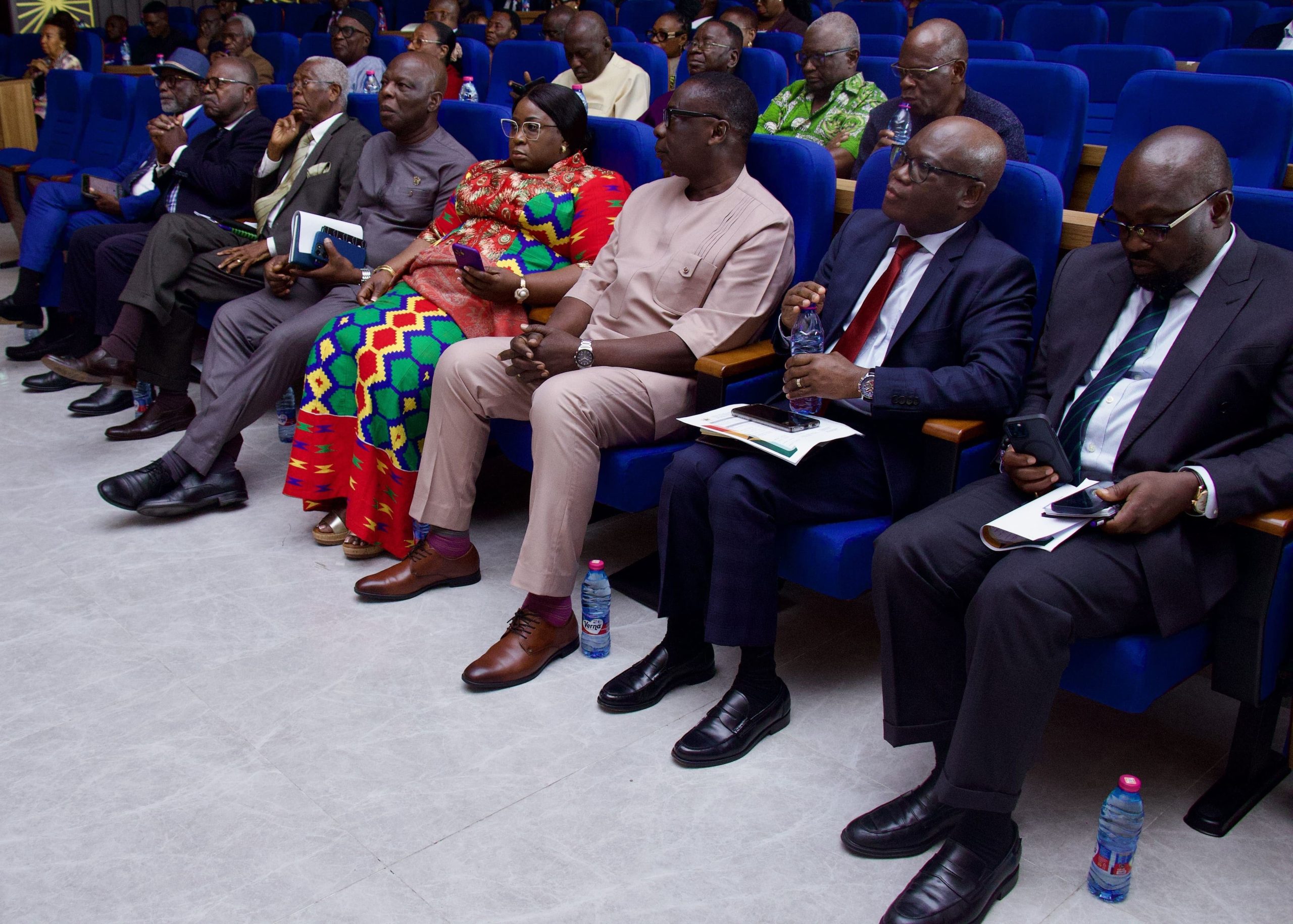
On Monday, 8th December, 2025 the Ministry of Foreign Affairs opened a two-day Stakeholders Workshop on Ghana’s Comprehensive Foreign Policy. The workshop aims to align national priorities with emerging global dynamics. Over the two days participants would hold discussions on key thematic areas including geopolitical trends, economic diplomacy, security cooperation, diaspora engagement and the role of technology in modern diplomacy, with the objective of generating practical, forward-looking recommendations to review the existing policy.
The workshop brought together Government Officials, Diplomats and representatives from Civil Society and Academia to contribute to the development of a coherent, modern and strategic foreign policy framework for the country.
In her opening remarks, the Acting Chief Director, Ambassador Khadija Iddrisu underscored the importance of drawing on collective expertise to strengthen Ghana’s diplomacy. She reaffirmed the country’s long-standing foreign policy foundations built on Pan-Africanism, non-alignment, peaceful coexistence and multilateral engagement. She also noted the need for coordination across institutions. Ambassador Iddrisu outlined six emerging pillars which would inform the framework: economic diplomacy, strategic partnerships, security and defence cooperation, climate and environmental diplomacy, diaspora and cultural engagement and a renewed commitment to multilateralism and South–South cooperation.
Delivering the keynote address, the Deputy Minister for Foreign Affairs, Honourable James Gyakye Quayson (MP) highlighted the urgency of a unified foreign policy approach in an increasingly complex global environment. He stressed that foreign policy formulation is now a shared national endeavour shaped by multiple sectors and called for a framework that protects Ghana’s sovereignty, drives economic opportunity and reinforces the country’s reputation as a stable and principled voice in global affairs.
The Stakeholders Workshop is in line with the Ministry’s commitment to build a more coordinated policy which is consistent with Ghana’s developmental agenda.