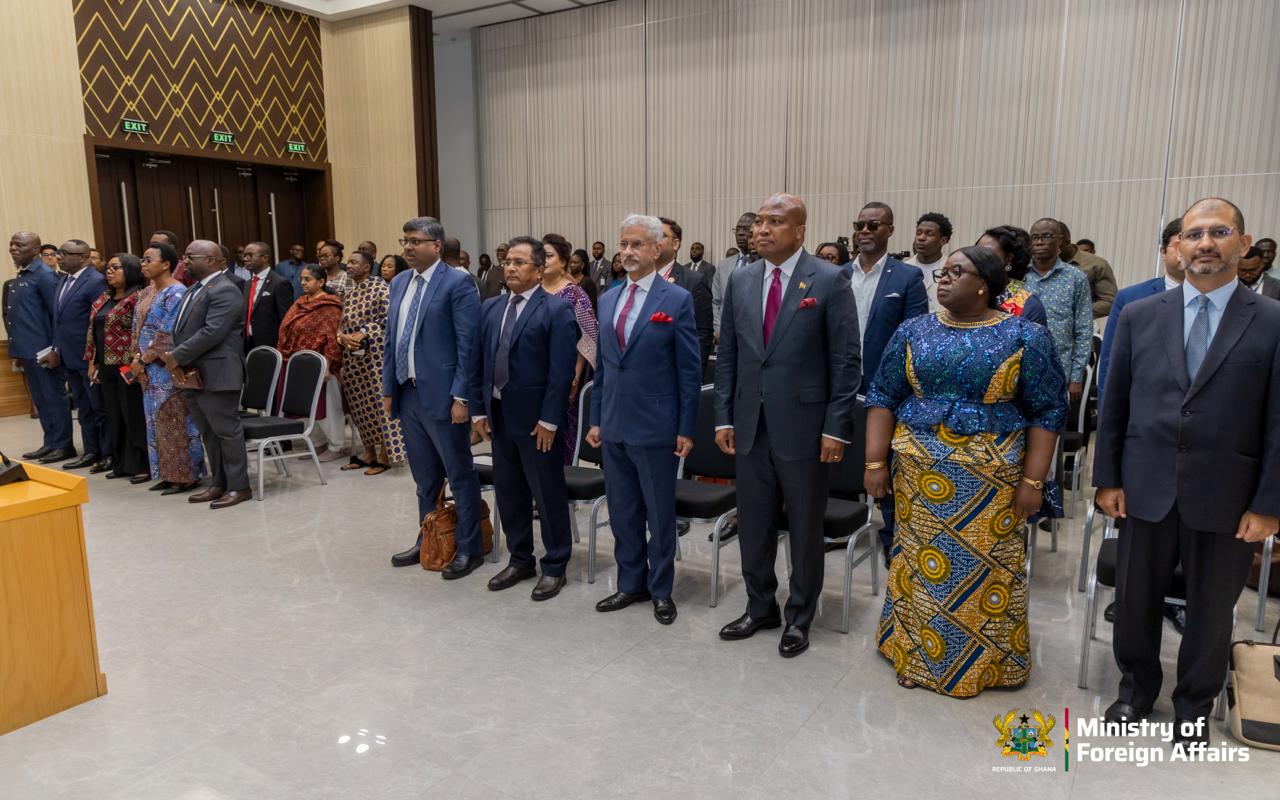
Ghana and India have reaffirmed their commitment to deepening their longstanding bilateral relations and advancing cooperation across a wide range of strategic areas following the first official visit to Ghana by India’s External Affairs Minister, His Excellency Dr. Subrahmanyam Jaishankar, on Tuesday, 6th October, 2026. The visit comes at a time when Ghana-India relations have been elevated to a Comprehensive Partnership, reflecting the depth, historical significance and growing scope of cooperation between the two countries.
In his remarks, the Minister for Foreign Affairs, Honourable Samuel Okudzeto Ablakwa (MP), welcomed Dr. Jaishankar to Ghana and described his visit as historic, being his first to the country. He noted that the elevation of bilateral relations to a Comprehensive Partnership was testament to the enduring and impactful relationship between Ghana and India, which had produced tangible development projects over the years, including the Jubilee House, the Kofi Annan ICT Centre and the Tema-Mpakadan Railway Project.
Honourable Ablakwa stressed that Ghana-India relations went beyond diplomatic engagements and had translated into substantive and practical cooperation in areas of national development. He expressed Ghana’s readiness to use the new Comprehensive Partnership framework to expand cooperation in areas of mutual interest and to deliver greater benefits to the peoples of both countries.
For his part, Dr. Jaishankar expressed appreciation for the warm reception accorded him and the members of his delegation by his Ghanaian Counterpart. He described his first visit to Ghana as a great pleasure. He said the visit was intended, among other things, to follow up on the historic visit of Indian Prime Minister Narendra Modi to Ghana and to deepen the newly established Comprehensive Partnership.
He noted that Ghana and India had historically been champions of the Global South and shared a commitment to independence, self-reliance, dignity and strategic autonomy. He observed that the two countries faced similar development challenges and therefore had significant opportunities to pool their experiences and expertise in addressing common priorities.
The two sides discussed a broad range of areas for enhanced cooperation, including agriculture, pharmaceuticals and healthcare, mining, defence, railway development, digital transformation, science and technology, renewable energy and skills development. Dr. Jaishankar highlighted the similarities between Ghana’s Accra Reset, Feed Ghana and One Million Coders initiatives and India’s programmes in health, food security, digital transformation and entrepreneurship, noting that such parallels created opportunities for knowledge and experience sharing.
A major outcome of the visit was the signing of two Memoranda of Understanding (MoUs), the MoU on Cooperation in Agricultural Research and Education between the Indian Council of Agricultural Research (ICAR) and the CSIR-Crops Research Institute (CSIR-CRI), Ghana, and the MoU on Cooperation in the Field of Biodiversity. The agricultural research agreement provides a framework for cooperation in areas including the exchange of scientists and technologists, scientific information and materials, and collaborative research and training.
The two Ministers also discussed the strengthening of cooperation between the Foreign Service Institute of Ghana and its Indian counterpart to facilitate the training of diplomats, exchange of
perspectives and sharing of experiences on common diplomatic and multilateral priorities. Ghana also expressed its intention to conclude a defence cooperation agreement with India, with the Minister indicating that the agreement was expected to be signed during his reciprocal visit to India early next year.
Another major development announced during the engagement was Ghana’s decision to formally apply to join BRICS. Hon. Ablakwa explained that the decision, approved by Cabinet, formed part of Government’s broader strategy to diversify Ghana’s international partnerships, expand economic options and strengthen cooperation within the Global South. He stressed that Ghana’s proposed membership would complement, rather than replace, its existing relationships with traditional development and financial partners.
The Minister noted that India’s position as a founding member of BRICS made it a strategic partner in Ghana’s bid and said Ghana had formally sought India’s assistance. Dr. Jaishankar, in response, said India had always been sympathetic and supportive of Ghana’s aspirations and goals, while noting that the application would ultimately be subject to collective consideration by BRICS members.
Ghana also identified railway development as a strategic area for expanded cooperation with India. Hon. Ablakwa noted that the operationalisation of the Tema-Mpakadan Railway Project provided a foundation for further collaboration, particularly in expanding Ghana’s railway network to reduce pressure on the country’s road infrastructure, facilitate the movement of heavy cargo and contribute to addressing traffic congestion.
The two sides further discussed cooperation in pharmaceuticals and health under President Mahama’s health sovereignty agenda, with Ghana seeking to establish a pharmaceutical hub to strengthen domestic capacity and resilience. ICT cooperation was also highlighted, particularly in support of the Government’s One Million Coders programme, building on the foundation provided by the Kofi Annan ICT Centre and India’s extensive expertise in digital technology.
Dr. Jaishankar also welcomed Ghana’s role in continental and multilateral affairs, particularly its engagement in the African Union and ECOWAS, and expressed India’s readiness to work closely with Ghana on issues of common interest within the Commonwealth and the United Nations. He further commended Ghana’s commitment to the reparatory justice agenda and restitution of cultural properties, and called for stronger cooperation between the two countries on Sustainable Development Goals and reform of the United Nations, including the Security Council.
The visit also featured a tree-planting activity at the Ministry of Foreign Affairs, symbolising the enduring friendship and growing partnership between Ghana and India and their shared commitment to sustainability and environmental responsibility.
The official engagements concluded with a lecture by His Excellency Dr. Subrahmanyam Jaishankar to diplomats and officials of the Ministry of Foreign Affairs at the Foreign Service Institute. The lecture provided an opportunity for Ghanaian diplomats to engage directly with the Indian External Affairs Minister on contemporary international affairs, Global South cooperation, strategic autonomy and the evolving international order.
The visit is expected to provide renewed impetus to Ghana-India relations and strengthen cooperation under the Comprehensive Partnership, with both sides expressing confidence that
the longstanding friendship between Ghana and India will continue to deepen and deliver tangible benefits for their peoples.